Pittsburgh's average elevation of 1,200 feet disguises a topography defined by extreme vertical relief, with slopes commonly exceeding 25 degrees in neighborhoods like Mount Washington and the South Side Slopes. These dramatic grade changes, carved by the Allegheny and Monongahela rivers over millennia, create inherent instability that demands retaining wall design far beyond standard prescriptive solutions. The local geology, dominated by the Pittsburgh red beds and interbedded shales overlain by colluvial deposits, introduces complex lateral earth pressure scenarios. In our track record, a wall in this region must account not only for static loads but also for the long-term creep of weathered claystone, a condition that leads to premature failure if the subsurface investigation is insufficient. Before defining the wall geometry, we typically integrate data from test pits to verify the depth to competent bedrock and assess the consistency of the overburden.
A retaining wall in Pittsburgh is not just a structural element—it is a hydrological intervention in a landscape still actively eroding.
Scope of work in Pittsburgh
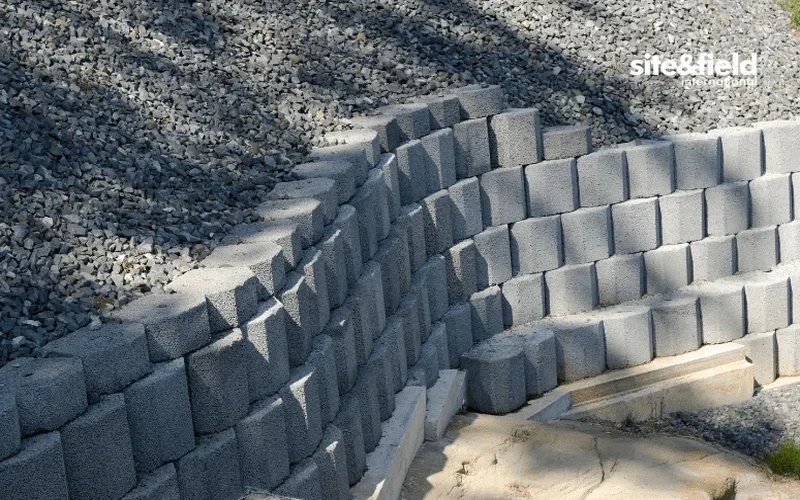
Local geotechnical conditions in Pittsburgh
The most common failure we observe in Pittsburgh is not a sudden collapse but a slow, insidious rotation or bulging caused by inadequate drainage behind the wall. Contractors unfamiliar with the local weathered shale sometimes treat the backfill zone as self-draining, omitting the continuous drainage blanket that prevents pore pressure buildup during the region's heavy spring rains. This oversight transforms the wall into a dam, with hydrostatic forces adding up to 62.4 pcf of lateral pressure—far exceeding the design assumptions. Another critical error is ignoring the long-term degradation of Pittsburgh's red bed claystone when exposed to air; once excavated, this material slakes rapidly, losing cohesion and increasing lateral thrust against the wall. Proper retaining wall design here must specify immediate protection of the cut face and a drainage strategy that remains functional through decades of seasonal saturation.
Our services
Our retaining wall design process in Pittsburgh is structured around the specific failure mechanisms prevalent in the Allegheny Plateau. Each phase builds on the previous one to create a wall that works with the site's hydrology rather than against it.
Cantilever and Counterfort Wall Design
Reinforced concrete walls engineered for the high lateral loads typical of Pittsburgh's colluvial slopes, with detailed reinforcement schedules and construction joint locations that account for differential settlement over mine voids.
Mechanically Stabilized Earth (MSE) Walls
Segmental block or wrapped-face systems designed with geogrid reinforcement lengths calibrated to the friction angle of Pittsburgh's in-situ silty clays, including global stability verification extending into the slope behind the reinforced mass.
Temporary Shoring and Excavation Support
Sheet pile or soldier pile and lagging systems for urban excavations in the Strip District or downtown Pittsburgh, where right-of-way constraints and adjacent historic foundations demand zero-deflection performance.
Quick answers
What is the typical cost range for retaining wall design in Pittsburgh?
For residential and light commercial walls, professional retaining wall design works in Pittsburgh typically range from US$1,180 for a straightforward gravity wall under 6 feet to US$4,240 for a complex cantilever or MSE wall exceeding 15 feet with surcharge loading. The fee covers geotechnical analysis, structural calculations, and stamped construction drawings. Site investigation costs are separate and depend on access conditions for drilling equipment.
How does Pittsburgh's geology affect retaining wall design?
The Pittsburgh Formation—interbedded shale, siltstone, and claystone—weathers into a low-permeability colluvium that holds water against the wall. This requires us to design for elevated hydrostatic pressure and to specify durable drainage materials that resist clogging from fine-grained soil particles. The presence of abandoned mine workings in many areas also demands a subsidence assessment as part of the wall's serviceability evaluation.
Is a building permit required for a retaining wall in the City of Pittsburgh?
Yes. The Pittsburgh Department of Permits, Licenses, and Inspections requires a permit for any retaining wall over 4 feet in height, measured from the bottom of the footing to the top of the wall. Walls supporting a surcharge (such as a driveway or building) require a permit regardless of height. The submission must include structural calculations and construction drawings sealed by a Pennsylvania-registered Professional Engineer.