A six-story mixed-use project in Lawrenceville hit refusal on weathered shale at 18 feet. The geotechnical report relied on SPT data. The problem was the 3-foot variation in refusal depth across the pad. Standard borings missed it. The structural engineer requested continuous profiling. The CPT truck mapped the shale interface every 2 centimeters, revealing a 4-foot dip under the east tower footprint. Foundation design changed from spread footings to a mat with grade beams bridging the variable rock. Pittsburgh's colluvial deposits and Red Bed geology demand this resolution. Standard sampling intervals average conditions; CPT data shows what happens between. For sites along the Allegheny or Ohio river terraces, where soft alluvium overlies rock at unpredictable depths, the plate load test confirms bearing capacity once the CPT defines the stratigraphy.
Two-centimeter resolution on shale refusal depth eliminates the interpolation risk that standard borings introduce in Pittsburgh's variable overburden.
Scope of work in Pittsburgh
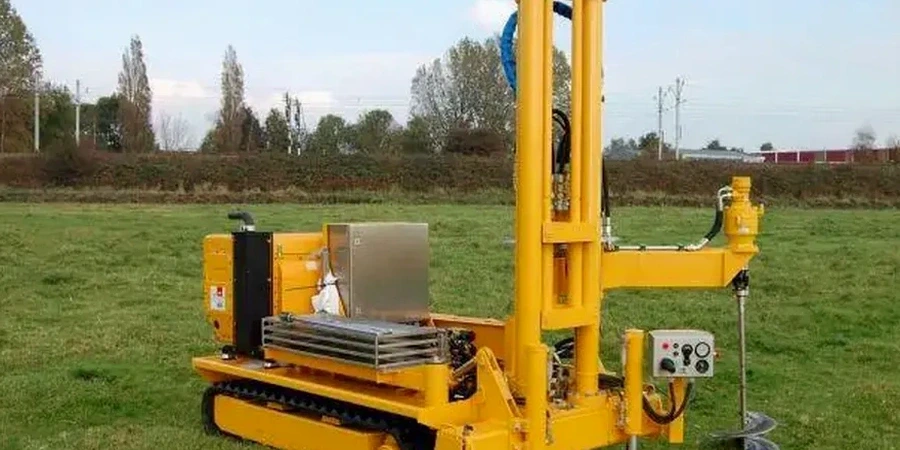
Local geotechnical conditions in Pittsburgh
The Pittsburgh Geological Survey maps show the Conemaugh and Monongahela Groups underlying much of the city. Red beds, claystone, limestone, and sandstone interbedded with soft shale layers. Weathering profiles reach 30 feet in some zones. CPT refusal on sound rock provides a definitive bottom-of-investigation boundary. More critical are the intermediate materials: completely weathered shale that behaves like stiff clay but transitions abruptly to rock. Standard penetration tests in this zone give misleading N-values. The cone detects the transition through tip resistance spikes. Pore pressure response identifies drainage boundaries where perched water sits on less weathered rock. Ignoring these transitions leads to differential settlement. The CPT also maps soft clay lenses within glacial lake terrace deposits along the Ohio River floodplain. These lenses trigger bearing capacity reductions and settlement calculations that standard borings with 5-foot sampling intervals simply miss.
Our services
CPT testing in Pittsburgh generates data for multiple design applications. Each service below leverages continuous penetration data for site-specific conditions in Western Pennsylvania.
Piezocone (CPTu) Profiling
Cone penetration with pore pressure measurement at the u₂ position. Identifies drainage boundaries, perched water tables, and consolidation characteristics of Pittsburgh's clay lenses and weathered shale zones. Pore pressure dissipation tests at selected depths.
Seismic Cone (SCPTu) Testing
Downhole shear wave velocity measurement integrated with cone penetration. Provides Vs profiles for seismic site classification per ASCE 7-22 Chapter 20. Direct correlation with tip resistance and sleeve friction for Pittsburgh's colluvial soils.
CPT-Based Foundation Parameter Reports
Direct interpretation of undrained shear strength, relative density, constrained modulus, and equivalent SPT N60 values from CPT data. Output formatted for Pittsburgh-area structural engineers performing spread footing, mat, and deep foundation design.
Quick answers
How deep can CPT testing penetrate in Pittsburgh's geology?
A 20-tonne CPT truck typically reaches refusal in Pittsburgh on sound shale or sandstone bedrock. In weathered Conemaugh Group formations, refusal depths range from 15 to 45 feet depending on the degree of weathering. Glacial lake terrace deposits along the Ohio River may allow penetration to 80+ feet before encountering underlying rock. Refusal is defined as tip resistance exceeding the thrust capacity of the equipment, typically around 100 MPa for a 15 cm² cone.
What does CPT testing cost for a Pittsburgh site investigation?
CPT testing in the Pittsburgh metro area ranges from US$150 to US$250 per push, depending on depth, mobilization distance, and whether piezocone or seismic cone modules are required. A typical site investigation with 4 to 6 soundings averages US$1,800 to US$3,500 total including data processing and parameter interpretation reports.
How does CPT compare to SPT for Pittsburgh's colluvial soils?
CPT provides continuous data every 2 centimeters versus SPT sampling at 5-foot intervals. In Pittsburgh's colluvium, which contains angular shale fragments in a clay matrix, SPT blow counts are often erratic due to gravel interference. The CPT friction ratio distinguishes clay matrix behavior from gravel-rich zones, producing a more reliable soil behavior type classification. CPT also eliminates sampling disturbance, which is significant in Pittsburgh's sensitive weathered clay layers.
Is CPT accepted for seismic site classification under ASCE 7?
Yes. Seismic CPT (SCPTu) measures shear wave velocity directly through a downhole receiver array integrated with the cone penetrometer. Vs profiles from SCPTu satisfy ASCE 7-22 Chapter 20 requirements for site class determination. This is particularly valuable in Pittsburgh where Site Class C, D, and E conditions can exist on the same parcel due to variable weathering depth and fill thickness.