Pittsburgh's topography presents a unique set of geotechnical challenges that demand rigorous subsurface investigation. The city's characteristic steep slopes, carved by the Allegheny and Monongahela rivers, are blanketed with colluvial soils and weathered shale residuum that can vary dramatically over short distances. A comprehensive soil mechanics study here must account for more than just bearing capacity; it must evaluate the stability of ancient landslide deposits and the potential for mine subsidence in areas underlain by abandoned coal workings. Our approach integrates laboratory testing of undisturbed samples with field exploration to model how these complex formations will respond to structural loads and seasonal groundwater fluctuations. Complementing this with a slope stability analysis is often necessary when developing parcels along Pittsburgh's many hillsides, where even minor grading can reactivate dormant slip surfaces.
Pittsburgh's weathered shale and colluvial slopes demand a soil mechanics study that goes beyond bearing capacity to address time-dependent deformation and mine subsidence risk.
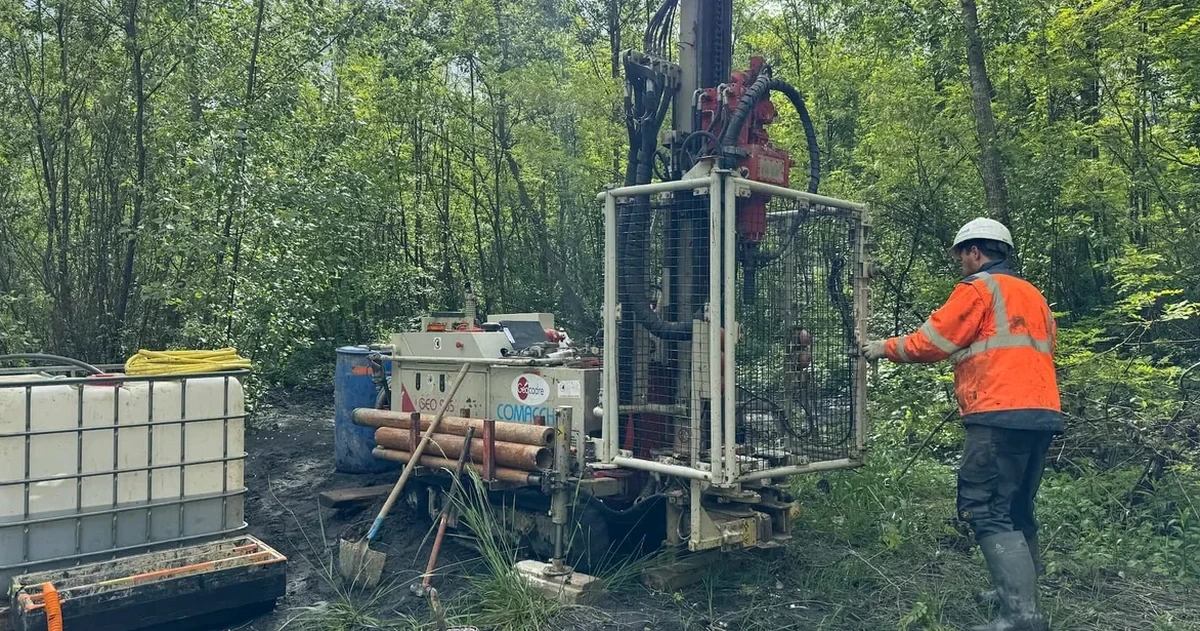
Scope of work in Pittsburgh
Local geotechnical conditions in Pittsburgh
Pittsburgh's urban expansion since the 19th century has pushed development onto hillsides and reclaimed valleys with a legacy of undocumented fill and mine entries. The geotechnical risk profile here is dominated by slope instability in colluvial soils, particularly after heavy spring rains saturate the ground. Deep-seated landslides in the Pittsburgh red beds have damaged structures and infrastructure for decades. A soil mechanics study isolates these hazards by measuring residual shear strength along pre-existing failure planes—a value far lower than peak strength parameters used in standard foundation design. Overlooking this distinction can lead to a slope that appears stable in analysis but fails during construction. For projects in the South Side Slopes or Mount Washington neighborhoods, quantifying this residual strength is not optional; it is the difference between a stable structure and a costly remediation.
Our services
Our Pittsburgh-area soil mechanics program combines field exploration with an accredited laboratory to produce a complete geotechnical model. Each study is directed by an engineer familiar with the Pittsburgh Coal Measures and the behavior of colluvial materials.
Foundation Design Soil Parameters
We establish allowable bearing pressures and settlement estimates for shallow footings and mat foundations in Pittsburgh's residual soils, accounting for long-term consolidation of weathered shale and potential swell in claystone units.
Slope Stability and Earth Retention Analysis
Laboratory determination of drained and residual shear strength for Pittsburgh colluvium and red beds, providing the input parameters needed for reinforced slopes, soil nail walls, and cantilevered retaining structures.
Quick answers
What does a soil mechanics study typically cost for a Pittsburgh residential lot?
For a standard residential parcel in Allegheny County, a soil mechanics study including a drilling subcontractor, laboratory testing, and an engineering report typically ranges from US$3,420 to US$5,430. The final cost depends on access constraints on steep lots, the depth to bedrock, and whether mine subsidence investigation is required.
How deep do you need to drill for a Pittsburgh soil mechanics study?
Borehole depth depends on the structure and site geology. For a typical residential foundation on a hillside, we often extend borings 15 to 25 feet into weathered rock to confirm refusal and rule out mine voids. IBC requires a minimum depth that extends through any uncontrolled fill or compressible strata, which in Pittsburgh's river valleys can exceed 30 feet.
Is a soil mechanics study required for retaining wall permits in Pittsburgh?
Yes. The Pittsburgh Department of Permits, Licenses, and Inspections requires a geotechnical report for any retaining wall over 4 feet in height or subject to surcharge loads. The soil mechanics study must deliver drained shear strength parameters for the retained soil and foundation bearing stratum, per IBC Chapter 18.