The biggest mistake a contractor makes in Pittsburgh is treating soft ground tunneling like a mining operation. The city's layered overburden—glacial till, colluvial deposits, and ancient river terraces from the Allegheny and Monongahela—does not behave like competent rock. Squeezing ground conditions appear fast, often within hours of excavation at the portal zones near the Golden Triangle. Our geotechnical analysis quantifies stand-up time, radial displacements, and groundwater inflows before the TBM ever arrives on site. For deep urban alignments, we pair this with deep excavation monitoring to track settlement under existing infrastructure, and use resistivity surveys to map buried valleys where soft soils deepen unexpectedly.
Soft ground in Pittsburgh demands a shift from rock mechanics to critical state soil mechanics—stand-up time is measured in hours, not days.
Scope of work in Pittsburgh
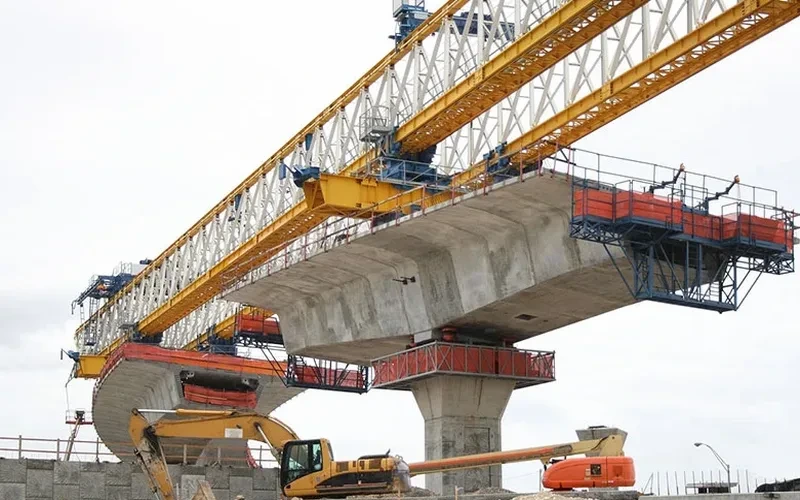
Local geotechnical conditions in Pittsburgh
Pittsburgh's tunnel risk profile shifts dramatically with seasonal groundwater fluctuations. The water table in the river alluvium rises sharply in spring, saturating the soft ground and reducing effective stress to near-zero in the looser pockets. A face collapse in these conditions does not announce itself with gradual deformation—it fails catastrophically, often within minutes. The mixed-face scenario at the interface between soft soils and the underlying Pittsburgh coal seam creates differential stiffness that drives asymmetric loading on the lining. Without a thorough geotechnical analysis, contractors face blowouts at the TBM face, uncontrolled settlements that crack century-old brick sewers above, and grout losses that blow the budget in weeks. We quantify these hazards using steady-state and transient seepage analyses calibrated to piezometer data collected over full hydrological cycles.
Our services
Our soft ground tunnel analysis covers the full project lifecycle, from feasibility geotechnical baselines to construction-phase instrumentation interpretation.
Tunnel Face Stability Analysis
Limit equilibrium and finite element assessment of required support pressure at the excavation face, considering layered soils and groundwater conditions.
Settlement Trough Prediction
Empirical and numerical modeling of surface settlements, building distortion angles, and utility strain for urban alignment planning.
Squeezing Ground Evaluation
Time-dependent deformation analysis using critical state parameters to define stand-up time and required initial support stiffness.
Quick answers
How long does a soft ground tunnel analysis take for a preliminary design phase?
A baseline geotechnical analysis for preliminary design typically requires four to six weeks. This timeline includes drilling and sampling along the proposed alignment, laboratory testing for strength and consolidation parameters, and the initial numerical modeling runs. We accelerate certain lab programs using consolidated-undrained triaxial tests with pore pressure measurement when schedule is tight.
What is the typical cost range for a geotechnical investigation for a soft ground tunnel?
Depending on the length of the alignment and the number of boreholes required, a comprehensive soft ground tunnel investigation in Pittsburgh ranges from US$3,680 for limited supplemental tests to US$16,410 for a full baseline study with advanced triaxial testing and instrumentation.
Which constitutive model do you recommend for Pittsburgh glacial tills?
We default to the Hardening Soil Model with small-strain stiffness (HSsmall) for Pittsburgh's overconsolidated glacial tills. This captures the high initial stiffness and the nonlinear degradation with strain amplitude that controls settlement trough width. For normally consolidated river alluvium, the Soft Soil Creep model better represents the time-dependent volume loss.
How do you handle the mixed-face condition between soil and rock?
We model the transition zone explicitly by assigning separate material sets to the soil and rock layers with interface elements. The key is capturing the stiffness contrast—the soft soil deforms plastically while the rock remains elastic—which generates shear stress concentration at the crown. We define the excavation sequence stepwise and monitor the plastic point trajectory in the soil ahead of the face.
What groundwater control measures do you evaluate for Pittsburgh tunnels?
Our analysis includes a hydrogeological model that simulates pre-excavation dewatering, TBM face pressure balancing, and post-construction drainage. For Pittsburgh's perched aquifers in the colluvium, we evaluate vacuum-assisted dewatering and probe drilling ahead of the face to intercept sand lenses before they cause a blowout.