The freeze-thaw cycles that carve through Pittsburgh's steep hillsides every winter create a very specific challenge for deep urban cuts. When you're excavating near a century-old brick structure in Lawrenceville or cutting into the weathered shale of Mount Washington, the ground doesn't behave like a textbook soil profile—it heaves, it relaxes, and it drains unpredictably. Geotechnical excavation monitoring in this city is less about generic compliance and more about reading the subtle movements that precede a retaining wall distress or a settlement crack in a neighboring church foundation. The colluvial silty clays overlying the Pittsburgh Coal Seam bedrock demand instrumentation that captures both lateral displacement and pore pressure shifts in real time, which is why we pair automated inclinometer strings with vibrating wire piezometers on nearly every shored excavation over 15 feet deep. When the spring rains saturate the upper weathered zone, the data tells us exactly when to adjust the bracing sequence before a problem becomes a liability.
In Pittsburgh's colluvial soils, a lateral movement of just a quarter inch at the top of a shored cut often signals a drainage issue behind the wall—not a structural failure.
Scope of work in Pittsburgh
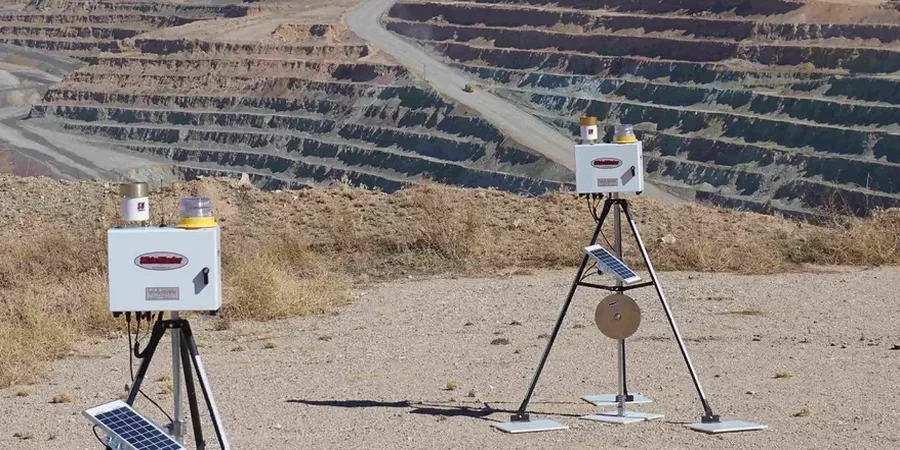
Field demonstration
Local geotechnical conditions in Pittsburgh
Under ASCE 7-22 and the IBC 2021 edition adopted by the City of Pittsburgh, the design professional of record must establish threshold values for lateral movement and vertical settlement before any mass excavation begins. In neighborhoods like South Side Flats and the Strip District, where the soil profile transitions abruptly from granular river terrace deposits into soft clay lenses, ignoring these thresholds risks triggering a classic wedge failure behind the shoring that can propagate upward into the public right-of-way. The real hazard is not the excavation collapse itself—it is the progressive damage to adjacent structures that were never designed to accommodate differential settlement. A row house built in 1890 with a shallow stone foundation will show distress at movements that a modern steel-frame building would tolerate without issue. Our monitoring protocols specify yellow-alert notification at 70 percent of the design threshold and red-alert automatic shutdown at 85 percent, giving the superintendent time to dewater, install additional struts, or re-sequence the lift before the condition escalates.
Our services
Our Pittsburgh-area excavation monitoring package is configured specifically around the city's mix of historic masonry, steep topography, and variable bedrock depth. Every scope of work includes a written monitoring plan submitted to the permitting authority before mobilization.
Deep Excavation Instrumentation
Full array deployment for cuts exceeding 15 feet: automated inclinometers, load cells on every third tieback, vibrating wire piezometers in the retained soil mass, and optical survey prisms on all exposed shoring elements. We deliver daily PDF reports with movement plots overlaid on the design cross-section.
Adjacent Structure Baseline Survey
Pre-construction condition documentation with crack monitors and settlement points installed on all structures within the zone of influence, followed by weekly reading cycles through backfill and pavement restoration. Includes a photographic register keyed to the floor plan for dispute resolution.
Quick answers
What is the typical cost of geotechnical excavation monitoring for a residential basement dig in Pittsburgh?
For a standard 10-to-14-foot basement excavation adjacent to a single neighboring structure, monitoring packages in the Pittsburgh metro area generally fall between US$780 and US$2,620 depending on the instrument count, duration, and reporting frequency. A basic setup with four settlement points, two crack monitors, and weekly readings over a two-month period sits near the lower end. Adding an automated inclinometer string with daily data delivery pushes the cost toward the upper end of that range.
At what excavation depth does the City of Pittsburgh require a monitoring plan?
The Pittsburgh Department of Permits, Licenses, and Inspections typically triggers a formal monitoring requirement when the proposed cut exceeds 12 feet in depth or when the excavation face is within a horizontal distance equal to the depth from an adjacent structure or public right-of-way. The IBC 2021 also requires the engineer of record to establish threshold values and a response protocol for any excavation that could affect neighboring properties, regardless of depth.
How do you distinguish between weather-related movement and actual shoring distress in the monitoring data?
We correlate the displacement readings with precipitation records and piezometer data collected from the same monitoring period. A spike in lateral movement that coincides with a heavy rain event, coupled with a rise in pore pressure behind the wall, almost always indicates drainage-related swelling rather than a structural issue. By overlaying rainfall, groundwater, and displacement on the same time-series plot, we isolate transient thermal or moisture effects from the progressive trend that signals a genuine stability concern. More info.