A common misstep we see in Pittsburgh is a project team specifying deep foundations before evaluating vibro-replacement. The city's river valleys are lined with thick alluvial silts and old slag fill layers that compress unevenly under load. A properly designed stone column grid can bring differential settlement below one inch across a building pad, avoiding the cost and schedule of piling. We design the column diameter, spacing, and depth to match post-treatment modulus targets, referencing subsurface data from CPT soundings or SPT borings taken within the footprint. In the Strip District and along the Monongahela, where undocumented fill often exceeds twenty feet, the design must also account for lateral squeeze potential under embankment loading. Getting the grid geometry right isn't guesswork; it depends on soil stiffness, load distribution, and the confining stress provided by the surrounding ground.
A stone column is a soil replacement system, not a pile; its performance depends entirely on the lateral confinement provided by the in-situ ground.
Scope of work in Pittsburgh
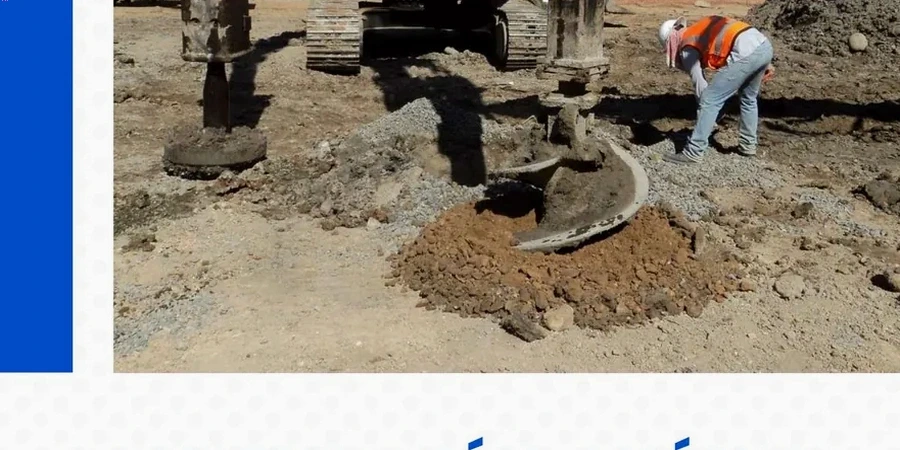
Local geotechnical conditions in Pittsburgh
Pittsburgh sits at roughly 1,200 feet elevation across a dissected plateau, and the valleys that cut through it hold more than 60 feet of compressible alluvium in places like the Golden Triangle. When a stone column design underestimates the thickness of those soft deposits, the columns end up floating in compressible material instead of transferring load to a competent stratum. That condition can drive post-construction settlements exceeding three inches, cracking slab-on-grade floors and pulling utilities apart. A second failure mode we encounter is bulging failure near the column head when the surrounding soil provides less than 20 psi of undrained shear strength. For sites underlain by abandoned mine voids—still common in Allegheny County—the design must also verify that the vibroflot energy won't trigger a collapse before the aggregate is placed. We cross-reference mine subsidence maps from the Pennsylvania DEP and adjust column depth and spacing to bridge documented voids safely.
Our services
Our stone column design package in Pittsburgh includes the full ground improvement scope, from feasibility analysis through post-installation verification.
Vibro-replacement design and analysis
We develop column grids using Priebe's method, calibrated to site-specific CPT and SPT data, to meet settlement and bearing capacity targets under IBC and ASCE 7 standards.
Field quality assurance and load testing
We specify zone load tests, modulus verification with plate bearing equipment, and aggregate gradation checks per PennDOT specifications to confirm design assumptions.
Quick answers
How deep can stone columns be installed in Pittsburgh's river valley soils?
In the alluvial deposits along the Allegheny and Monongahela rivers, stone columns can reach depths of 40 to 60 feet using standard vibroflot equipment. Deeper installations, up to 90 feet, are feasible with bottom-feed rigs where the soft clay extends further, but the design must verify that lateral confinement remains adequate at depth to prevent bulging.
What is the typical cost range for stone column design and installation in Pittsburgh?
For a Pittsburgh-area project, the combined design and installation cost typically runs between US$1,690 and US$5,730 per column, depending on diameter, depth, and access constraints. The total project cost scales with the number of columns required to meet the area replacement ratio, which usually falls between 10% and 35% of the treatment zone.
How do you verify that the stone columns are performing as designed?
We specify a zone load test, which applies 150% of the design bearing pressure to a group of columns and measures settlement over time. Plate load tests on individual columns and post-installation CPT soundings through the treated zone also confirm that the stiffness improvement matches the design modulus.
Can stone columns be used in Pittsburgh's reclaimed mine lands?
Yes, but the design must incorporate mine subsidence risk. We cross-reference Pennsylvania DEP mine maps and adjust column spacing and depth to bridge documented voids. In some cases, limited-mobility grouting is used prior to column installation to stabilize shallow openings before vibroflot energy is applied.
What aggregate specification do you require for stone columns in Pennsylvania?
We require open-graded crushed stone meeting Pennsylvania DOT No. 57 gradation, which provides high permeability and angular interlock. The stone must be clean, durable, and free of fines to prevent clogging during installation and to maintain drainage function within the column over the long term.